
The Phantom Leviathan and Moby-Dick
Two Captains, Two Obsessions, and the Dangerous Power of Belief
Two Voyages, Two Captains
More than a century and a half after Herman Melville published Moby-Dick in 1851, the story of Captain Ahab's relentless pursuit of the great white whale remains one of literature's most powerful examinations of obsession and authority.
The Phantom Leviathan returns to the nineteenth-century sea, where Captain Magnus Vane commands The Horizon in pursuit of an enemy whose existence remains uncertain.
Both captains can inspire loyalty, turn personal grievances into a common cause, and persuade ordinary sailors to risk their lives for a singular obsession.
Yet an important distinction separates their voyages. Ahab hunts a whale that has already wounded him. Vane pursues an enemy he believes caused his humiliations and misfortunes, though no one on his crew can verify its existence. His men must decide whether to trust their captain's certainty over evidence.
Through these two captains, the novels explore what happens when one man's private conviction becomes an entire ship's destiny.
Captain Ahab and Captain Magnus Vane
Two Men Consumed by Obsession
Captain Ahab of Herman Melville's Moby-Dick and Captain Magnus Vane of The Phantom Leviathan share a dangerous conviction: each believes that destroying a particular enemy will somehow restore what he has lost.
Ahab's obsession is deeply personal. The white whale has taken his leg, leaving him physically wounded and consumed by a desire for revenge. A formidable and experienced captain, Ahab gradually places his private vendetta above the commercial purpose of the Pequod and the safety of its crew.
Vane's grievance is less tangible. He attributes his misfortunes and humiliations to a mysterious leviathan whose existence remains unproven. Yet his certainty is persuasive. He offers his sailors an explanation for their troubles, an enemy upon whom blame can be placed, and a purpose that makes sacrifice seem honorable.
Both captains understand the power of loyalty. Ahab commands through fierce personal authority and an almost supernatural intensity. Vane cultivates allegiance through shared resentment, promises of vindication, and the growing expectation that a faithful sailor must embrace his captain's convictions.
Neither man is without intelligence, courage, or the qualities that first earned his crew's respect. Their tragedy lies partly in the corruption of those strengths.
The distinction is revealing: Ahab demands that his men pursue his revenge. Vane gradually persuades his crew that his grievance belongs to them all.
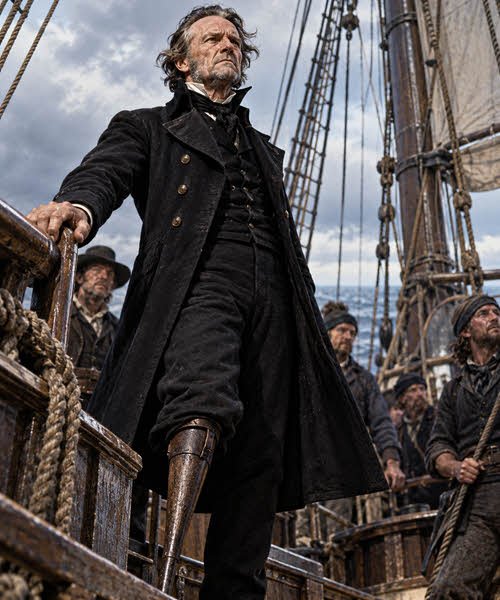
Captain Ahab
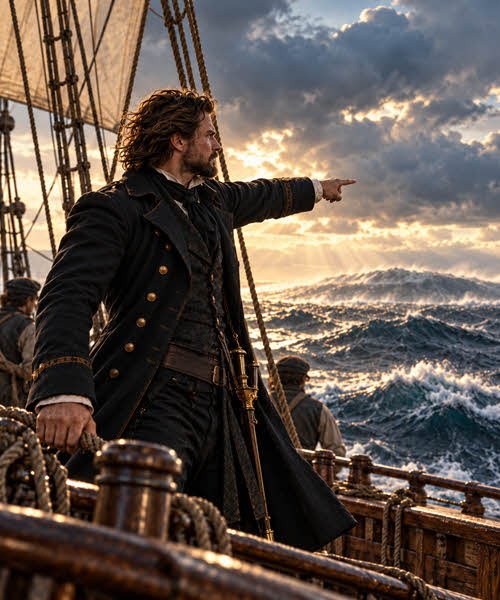
Captain Magnus Vane
The White Whale and the Phantom Leviathan
In Herman Melville's Moby-Dick, the great white whale is real. Moby Dick has wounded Captain Ahab, destroying his leg and leaving him consumed by revenge. Although Ahab invests the creature with meanings far beyond its animal nature, the whale's existence is never in doubt.
In The Phantom Leviathan, the enemy is considerably more elusive.
Captain Magnus Vane believes a mysterious leviathan is responsible for his misfortunes, yet no member of his crew can confirm that such a creature exists. Its presence is inferred from uncertain signs, unexplained disturbances, and the captain's increasingly forceful interpretations of events.
This distinction transforms the nature of the pursuit.
Ahab demands that his sailors help destroy an enemy he has encountered. Vane asks his men to accept the existence of an enemy largely upon his authority. Every unexplained event becomes potential evidence, while the absence of proof does little to weaken his conviction.
Both captains pursue something larger than themselves. Yet the phantom leviathan introduces a particularly unsettling possibility: an enemy need not exist to exercise extraordinary power over those who believe in it.
The Crews Who Follow: Loyalty, Doubt, and Responsibility
Neither Captain Ahab nor Captain Magnus Vane could pursue his obsession without the sailors who follow him. Yet the men aboard their vessels are far from united in their convictions.
In Moby-Dick, Starbuck, the Pequod's first mate, recognizes the danger of Ahab's revenge. His objections are sincere, but duty, conscience, and fear of challenging his captain prevent him from acting decisively. Ishmael, meanwhile, serves as an observant narrator, recording the strange personalities and events of a voyage he does not control.
In The Phantom Leviathan, Noah Wake occupies a similar position as witness, though his understanding develops slowly and his doubts do not always produce resistance. Silas Grin offers a different response. His humor makes him popular among the crew, but laughter can also deflect uncomfortable questions and make obedience easier to bear.
The crews of both ships contain believers, skeptics, opportunists, and men chiefly concerned with surviving the voyage. Their motives differ, as do their opportunities to resist.
Together, these characters raise a difficult question: When a leader's judgment becomes dangerous, how much responsibility belongs to those who continue carrying out his orders?
Neither novel offers the comforting assumption that recognizing danger necessarily leads to the courage to confront it.
The Meaning of the Leviathan: From the Bible to Hobbes
The leviathan has long represented forces beyond ordinary human control. In the Old Testament, particularly the Book of Job, it appears as a terrifying sea creature whose immense power demonstrates the limits of human strength and understanding. No mortal can easily command or overcome it.
In 1651, political philosopher Thomas Hobbes gave the name a different meaning. His Leviathan described the powerful sovereign authority created when individuals surrender certain freedoms in exchange for protection, security, and social order.
Herman Melville's Moby-Dick draws upon the biblical tradition, transforming the great whale into a creature upon which Captain Ahab projects his anger at existence itself.
The biblical and political traditions illuminate different aspects of The Phantom Leviathan. Captain Vane's unseen enemy recalls the fearsome creature of scripture, while the crew's submission to his authority raises questions associated with Hobbes: Why do people surrender power to another, what protection do they expect in return, and what happens when the authority entrusted with their safety becomes a source of danger?
Hobbes regarded strong sovereign government as a safeguard against disorder. Aboard The Horizon, Captain Vane gradually turns the power of command toward the pursuit of his private grievance, drawing his crew into dangers they never agreed to face. The comparison invites readers to consider both the obligations of those who command and the responsibilities of those who follow.
A Maritime Allegory for Our Time
Although The Phantom Leviathan unfolds aboard a nineteenth-century sailing vessel, the forces shaping its voyage remain familiar in the modern world.
Charismatic leaders still offer simple explanations for complicated problems. Shared grievances can unite communities, while suspicion of outsiders can strengthen the bonds among those who believe themselves threatened. In such circumstances, questioning a leader may come to be regarded as disloyalty rather than an exercise of independent judgment.
Yet the men aboard The Horizon are neither fools nor helpless victims. They possess ambitions, fears, loyalties, and reasons for making the choices they do. Some recognize the dangers before them but find it easier to remain silent.
Through their experiences, The Phantom Leviathan invites readers to consider the relationship between leadership and personal responsibility.
The ocean and the century may be distant, but the human choices remain unsettlingly familiar.
Discover The Phantom Leviathan
Two captains. Two extraordinary pursuits. And a question that reaches far beyond the nineteenth-century sea: What happens when one man's obsession becomes the destiny of everyone who follows him?
Inspired by Herman Melville's Moby-Dick, The Phantom Leviathan offers a compelling voyage into the darker reaches of human nature, where loyalty is tested, doubt carries consequences, and the greatest danger may not be the enemy everyone fears.
For readers of historical maritime fiction, psychological drama, and literary allegory, Captain Magnus Vane and the crew of The Horizon await.
The Phantom Leviathan is available in Kindle and paperback editions on Amazon.