
About The Phantom Leviathan
A voyage into obsession, loyalty, and the dangerous certainty of one man.
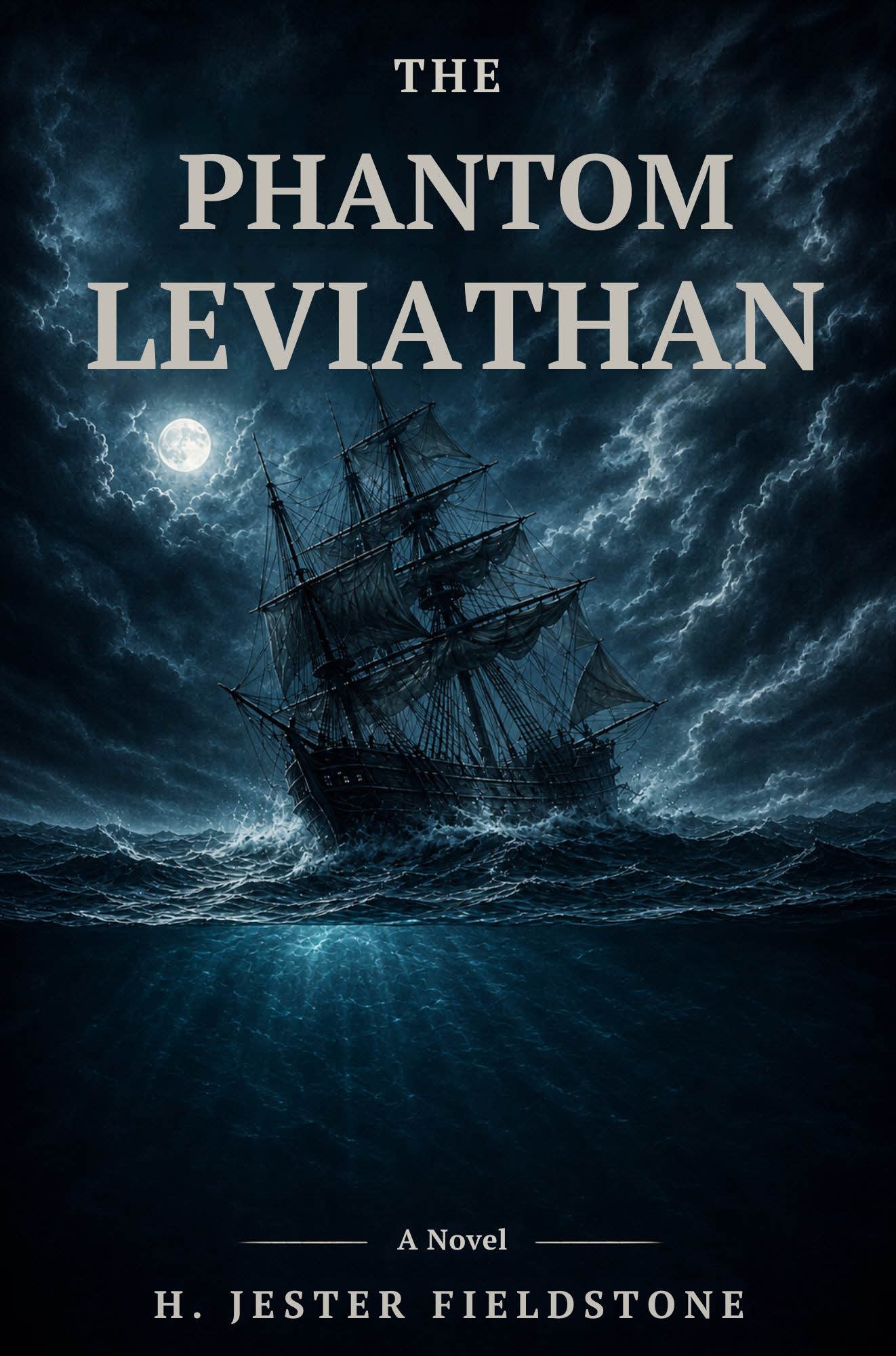
A captain with an enemy no one has seen. A ship bound for an uncertain destination. A crew whose loyalty will be tested far beyond anything they imagined when they came aboard.
Set upon the open ocean in the early nineteenth century, The Phantom Leviathan follows Captain Magnus Vane and the men of The Horizon as an ordinary voyage gives way to an extraordinary pursuit.
Combining historical maritime fiction, psychological drama, and political allegory, the novel examines what happens when one man's certainty becomes the governing purpose of an entire crew—and questioning that purpose grows increasingly dangerous.
A book by H. Jester Fieldstone
The Story
Captain Magnus Vane commands The Horizon with a confidence that has earned him the loyalty of his crew. He believes a mysterious leviathan waits somewhere upon the ocean, responsible for the injuries and humiliations he has suffered.
But there is a troubling difficulty. No one aboard has seen the creature, and the evidence of its existence remains uncertain.
At first, the voyage proceeds much as any other. The men attend to their duties, endure the weather, and accept their captain's authority. Yet as The Horizon sails farther from familiar waters, Vane's determination begins to shape every decision aboard.
For some sailors, the pursuit offers purpose. Others begin to question whether they can trust their captain's conviction. Speaking openly, however, carries risks that become harder to ignore.
Among the crew is Noah Wake, a young sailor who watches the changes around him. He is neither a natural rebel nor an unquestioning believer. Like the other men, he must weigh what he sees against what he has been told and decide when silence becomes a choice of its own.
As the voyage continues, The Horizon becomes a world where belief, fear, ambition, and loyalty are tested against the sea's hard realities.
The World of The Horizon
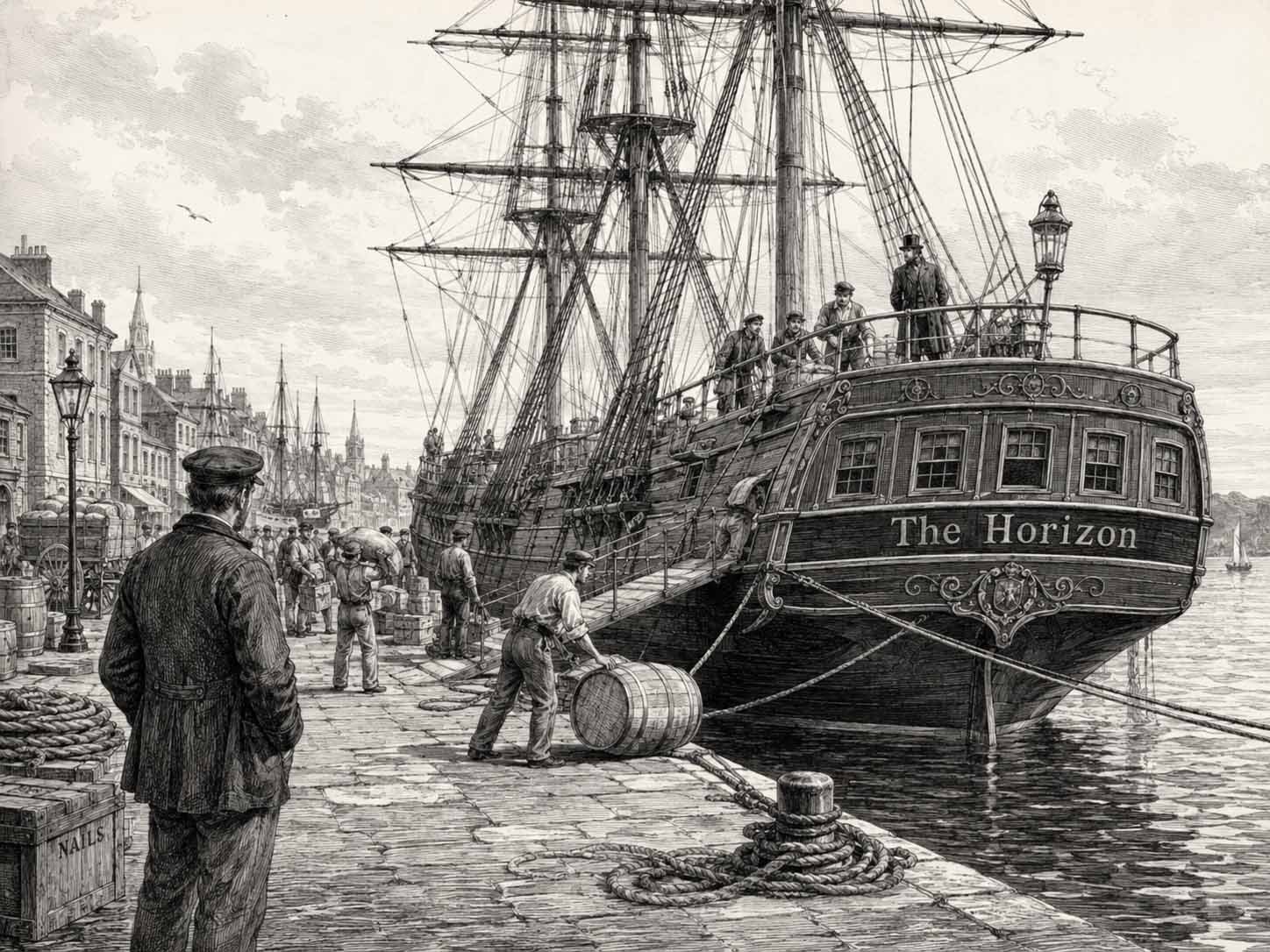
Life aboard an early nineteenth-century sailing vessel demands labor, discipline, and constant attention to the weather. The crew must manage the sails, maintain the ship, stand watch, and endure long stretches of discomfort and uncertainty.
The men of The Horizon live in close quarters, dependent upon one another for their safety and survival. A careless hand, a misunderstood order, or a sudden change in the wind can endanger everyone aboard.
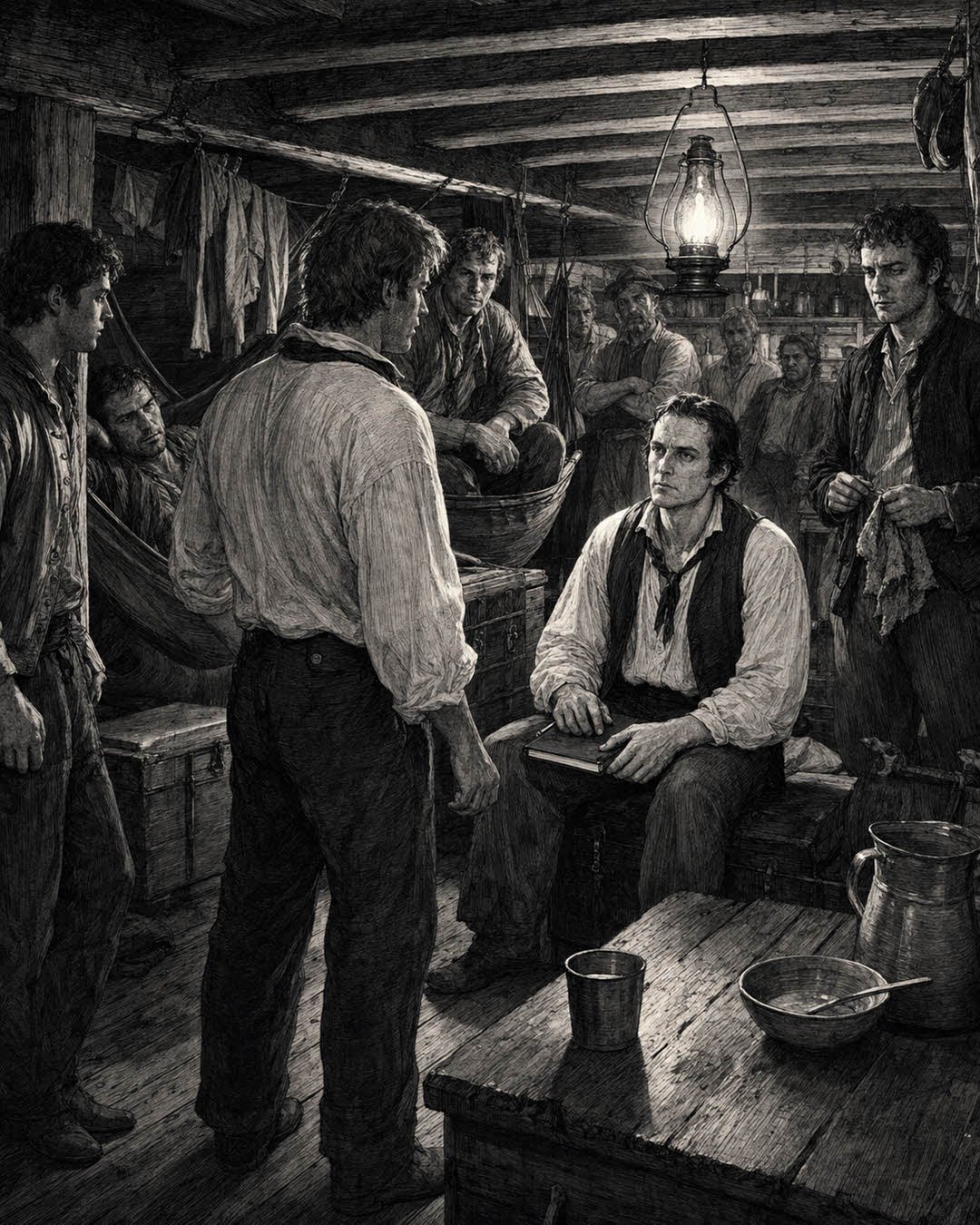
Belowdecks, the men eat and sleep within earshot of one another. Wet clothing hangs where space can be found. Boots scrape the planking as watches change, and the ship's timbers work and creak through the night. A disagreement over a small duty may last for days because neither man can avoid the other. Even those who distrust their shipmates must depend upon them when the weather turns.
Against this physical world of timber, canvas, salt, and weather, Captain Vane's extraordinary pursuit gradually overtakes the ordinary purposes of the voyage.
The sea remains indifferent to what the men believe.
The Characters
Captain Magnus Vane
The master of The Horizon is commanding, confident, and deeply convinced his purpose is righteous. His confidence attracts loyalty, particularly among men seeking certainty in a dangerous world.
Yet Vane possesses little patience for those who challenge his understanding of events. His authority extends beyond navigating the vessel, gradually shaping how his crew interprets danger, misfortune, and responsibility.
Noah Wake
Noah is a young sailor whose account gives the reader a view of life aboard The Horizon.
Observant but inexperienced, he struggles to reconcile the captain's explanations with what he witnesses. His doubts develop unevenly, complicated by his responsibilities, his relationships with the other sailors, and his uncertainty about his own judgment.
Noah's story is as much about what he fails to understand as what he eventually recognizes.
Silas Grin
Silas brings humor and companionship to the difficult routines of shipboard life. Quick to recognize the absurdities of his fellow sailors, he eases tension and makes himself welcome.
His wit also helps him avoid uncomfortable questions. Silas understands the crew's temper and knows when laughter can settle a disagreement more effectively than an argument.
Whether his influence ultimately serves the men around him is another matter.
The Crew
The remaining sailors are neither uniformly devoted to Vane nor united in opposition to him.
Some believe wholeheartedly in the captain's mission. Others follow because they respect his experience, fear the consequences of disagreement, or simply wish to complete the voyage and return home.
Their differences become increasingly important as The Horizon sails onward.
The Questions at the Heart of the Novel
At the center of The Phantom Leviathan lies a troubling question: How far will ordinary people follow a leader who offers them certainty, purpose, and someone to blame?
Captain Vane's pursuit places his crew in circumstances where loyalty can become difficult to distinguish from obedience. Men who privately harbor doubts may nevertheless carry out orders, defend decisions, or remain silent when others are threatened.
The novel explores the appeal of shared grievance and the comfort of belonging to a common cause. It also examines the less comfortable choices made by those who sense that something is wrong but find reasons to continue.
No sailor aboard The Horizon is entirely free of responsibility, and few enjoy the luxury of acting without consequences.
Through their daily lives and the decisions they make, the novel asks readers to consider the complicated relationship between personal judgment and collective belief.
A Literary Voyage Inspired by Moby-Dick
Herman Melville's Moby-Dick, published in 1851, established one of literature's most enduring portraits of obsession through Captain Ahab's pursuit of the great white whale.
The Phantom Leviathan draws upon this tradition of maritime fiction while exploring a different form of danger.
Ahab pursues a creature whose physical existence is beyond dispute. Captain Vane's quarry is far less certain, and his crew must confront the possibility that the threat governing their lives may not be what their captain believes.
Both novels examine the power of a captain's convictions over the men entrusted to his command. Yet The Phantom Leviathan places particular emphasis upon the crew's participation, their reasons for following, and the gradual compromises through which individual judgment can be surrendered.
The result is a literary allegory rooted in the atmosphere of the nineteenth-century sea, with questions that reach well beyond its historical setting.
Who Will Enjoy The Phantom Leviathan?
The Phantom Leviathan is written for readers who appreciate historical fiction with psychological depth and moral complexity.
Those drawn to maritime literature, the works of Herman Melville, or novels that explore the influence of powerful personalities will find familiar concerns approached from a different perspective.
Readers interested in political allegory will also recognize questions about grievance, group identity, leadership, and the difficult relationship between truth and belief.
Although the story unfolds aboard a sailing vessel, its greatest tensions arise from the people who inhabit it: their loyalties, disagreements, weaknesses, and attempts to make sense of the circumstances surrounding them.
This is a novel for readers who enjoy a compelling story that continues to invite reflection after the final page.
Begin the Voyage
The men of The Horizon have entrusted their lives to Captain Magnus Vane. They share a vessel, a destination, and a purpose few dare question.
Beyond the familiar waters, something awaits them. Whether it is the enemy their captain has promised or the consequences of following him is a question each man must face.
Discover The Phantom Leviathan, a historical maritime novel of obsession, loyalty, and the price of unquestioning belief.
Available in Kindle and paperback editions on Amazon.